Lasers that shoot down drones, robot submarines, reactors switching on and a Canadian around the Moon — the year the future stopped being a promise.
America · Britain · Australia · Canada
Four books, one year, one method. Every invention in this collection reached a real, reported milestone in 2026 — launched, flown, approved, switched on or put to its first proper test. Each one gets its own page: who built it, where it happened, what it does in plain English, why it matters, and a Reality Check on what still has to be proven.
“I watch the news every night and still didn’t know four new reactors went critical in a single month. The American book laid it out one page at a time — and the Reality Check at the bottom keeps it honest.”
 Dale W.59, Dayton, Ohio
“I bought it for my grandson and ended up reading it first. The laser that shot down drones near Fort Bliss, the robot wingmen — each entry takes a minute, so I read ten with my morning coffee.”
 Brenda H.62, Knoxville, Tennessee
“The Canadian volume made me proud — Artemis II, the Darlington small reactor, the Arctic radar. Then I read the British and Australian ones and realised how much I’d been missing. Worth it for the scorecard alone.”
 Gord L.64, Prince Rupert, British Columbia
Every year the headlines promise that some new invention will change everything, and most of the time the promise quietly fades. 2026 was different. A laser shot down real drones. Humans flew around the Moon for the first time since 1972. Robot submarines joined a navy. A gene therapy helped children born deaf to hear. Robotaxis started carrying passengers in London.
The problem is that it all arrived as noise — a headline here, a clip there, a hundred tabs you never finished. Nobody put it in one place and told you plainly what each thing is, who built it, and whether it actually works.
This collection does exactly that — 800 times, across the four countries building the most.
Every entry takes about a minute to read and stands on its own. Read a volume front to back, or open it anywhere. By the end you will understand the machines, medicines and breakthroughs shaping the next decade better than almost anyone you know.
You could piece 2026 together yourself. Here is what that looks like next to having it done for you.
| This Collection | Scrolling headlines | Free videos | |
|---|---|---|---|
| 800 inventions in one place | ✓ | ✕ | One at a time |
| Who, where & the exact 2026 moment | ✓ Every entry | Sometimes | Sometimes |
| A Reality Check on the hype | ✓ Every entry | ✕ | Rarely |
| What shipped vs. what slipped | ✓ 2026 Scorecard | ✕ | ✕ |
| What to watch in 2027 | ✓ In every book | ✕ | ✕ |
| Read offline, keep forever | ✕ | ✕ |
The real contents of every volume. Each book closes with a 2026 Scorecard, a What to Watch in 2027 list and a note on sources.
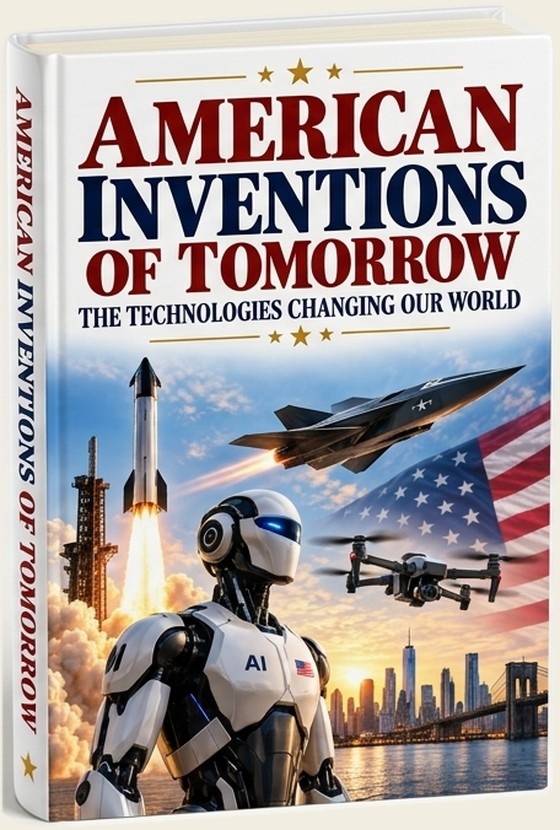
Lasers, robot wingmen, Moon rockets, new reactors, gene therapies, AI supercomputers and the factories that build them — eleven parts, from the laser that went to work on the border to Disney’s shape-changing animatronic.
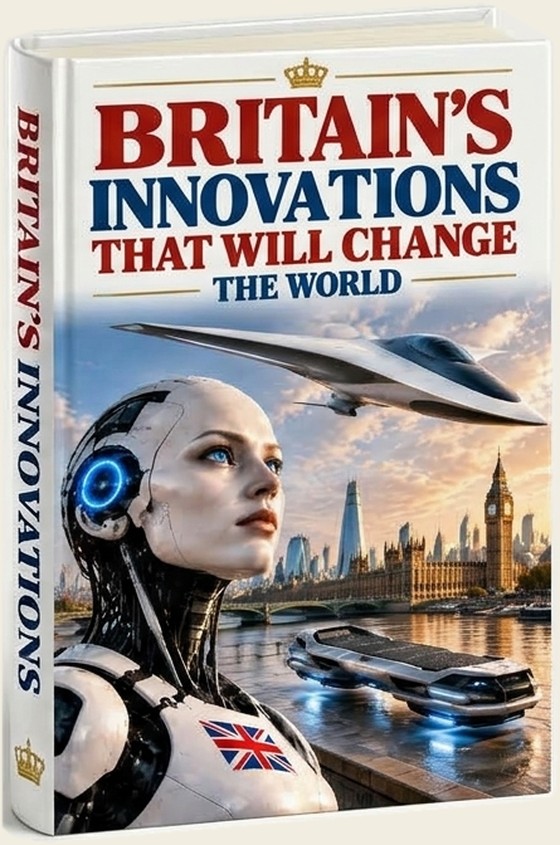
Lasers, autonomous helicopters, robotaxis, small reactors, gene therapies and quantum computers — the year the DragonFire laser was brought forward, Proteus flew itself over Cornwall and Wylfa got its first small modular reactors.
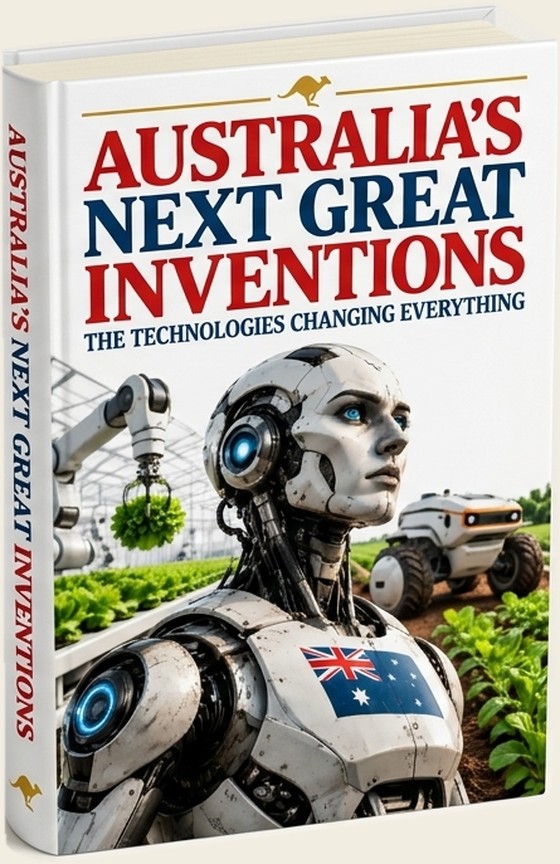
Robot submarines, home-made missiles, giant batteries and quantum computers — Ghost Shark enters Navy service, guided rockets are fired at Woomera, and a Hobart shipyard delivers the world’s largest battery-electric ship.

A Canadian around the Moon, new submarines and small reactors, quantum computers and the people who build them — plus North America’s first verified direct-air-capture carbon credits and the teenage scientists of the Canada-Wide Science Fair.
So Great World is the home of US So Great, UK So Great, AU So Great and CA So Great — channels covering the machines, medicines and breakthroughs being built right now, explained in plain English.
These books are the long version of what the channels do one story at a time. Three rules run through all four: real events only, every entry tied to something publicly reported; honest about hype, so the projects that slipped, stalled or blew up on the pad are in here too; and plain English — if you can follow the evening news, you can follow these books.
Yes. Every entry is tied to something publicly reported through mid-September 2026 — announcements from government agencies, companies, research labs and established news outlets. Where a figure is a company claim rather than an official confirmation, the text says so, and every entry ends with a Reality Check on what still has to be proven.
The videos tell one story at a time. The books put 200 per country in one place, each with the same fact strip, the same plain-English explanation and the same honest catch — plus a scorecard of what shipped and what slipped, and a watch list for 2027. It is the whole year, organised, on your shelf.
Because we would rather you read all four countries than pick one. Bought separately the four books are $68.00; together they are $29.99 during the launch promo.
Illustrated PDF eBooks. Checkout is handled by Gumroad and the download link arrives instantly by email. Read them on your phone, tablet, computer or e-reader — or print them.
Of course — each volume is $17 on its own. Use the buttons at the top of the page or under each book in “What’s Inside.”
No. There is no jargon without an explanation and each entry takes about a minute to read. They are written for curious people who follow the news and want the whole picture.
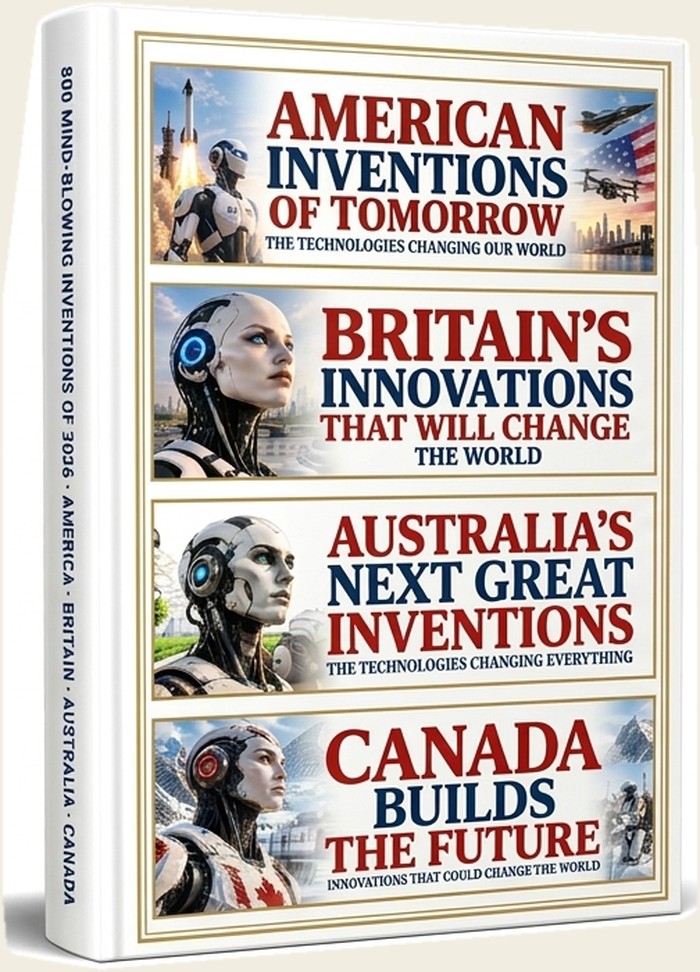
America, Britain, Australia and Canada — 613 illustrated pages for less than the price of two books.
Take one country for $17 — or all 800 inventions for $29.99.
America, Britain, Australia and Canada — $68.00 $29.99 until the timer runs out.
 Yes — Send Me All Four
 So Great World